 Image 1 of 5
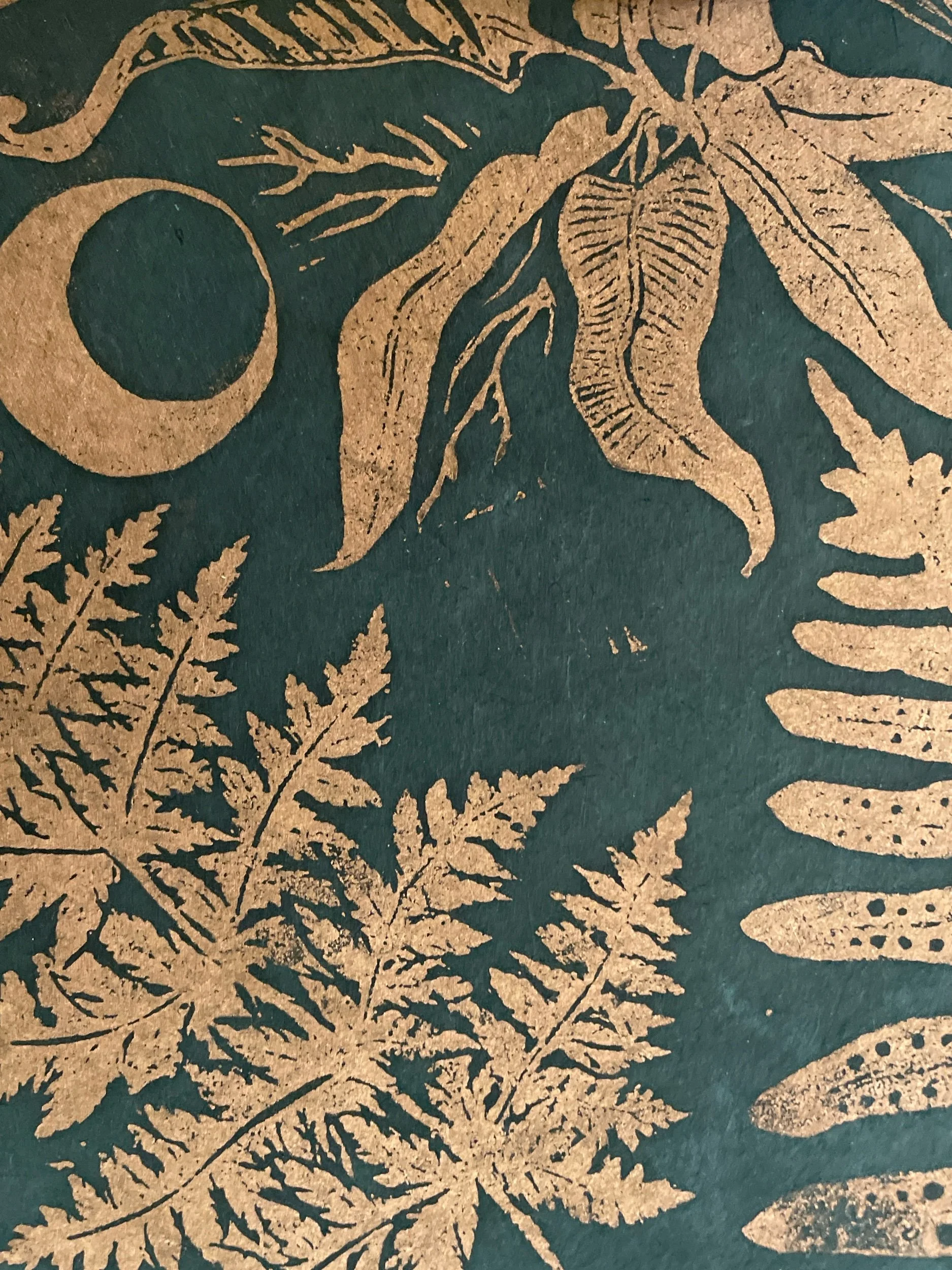 Image 2 of 5
 Image 3 of 5
 Image 4 of 5
 Image 5 of 5
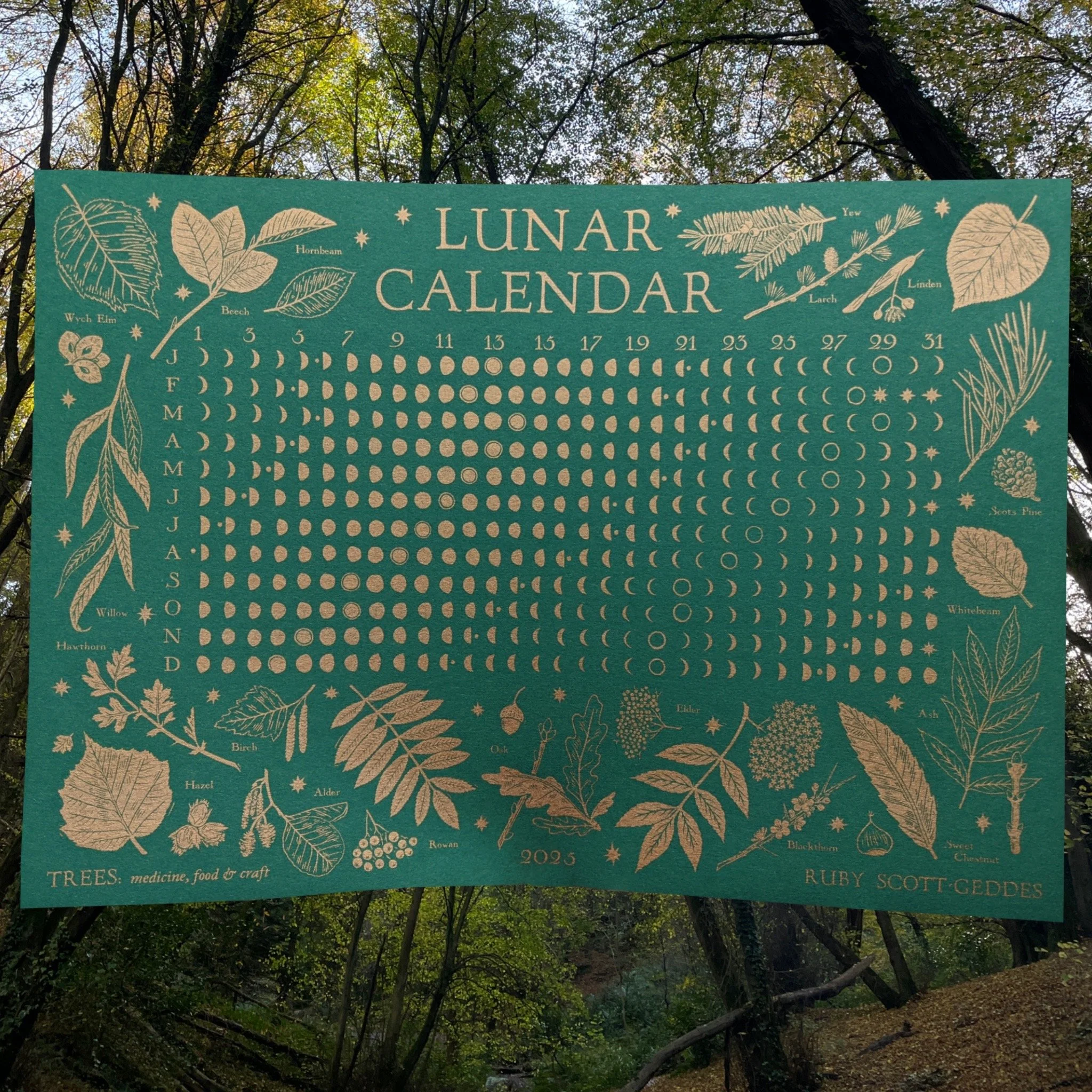
You can now preorder this year’s calendar with a wee discount for early birds! It features illustrations of ferns that you can find growing across the UK, in urban and wilder places too. They’ll be ready to post to you towards the end of the first week of November. I’ve included images from a couple of previous calendars so you can see what they’re like in print…
This is a limited print run, risograph-printed in gold ink on your choice of dark forest green, deep blue, or midnight black (a crow-approved shade that dances between inky dark purplish blue-black and charcoal depending on the light) onto heavyweight cartridge paper (A3: 29.7x42cm).
Feel free to get in touch if you’ve any questions as I’m always happy to hear them 🌱
About the Ferns
Ferns are a little mysterious, and can be tricky to identify, but have been known by humans as medicine, food, craft materials, and the subjects of folklore and legend around the world since prehistory. I’ve made this lunar calendar so you can get to know them as they grow through the year, as the moon waxes and wanes. I’ve illustrated them with their identifying botanical features, included common names, scientific names, and some -almost- forgotten names that signify their historic medicinal uses, so you can start to recognise these beautiful plants, and learn a little about each of their stories along the way:
- Moonwort, that was thought to have been an gathered under the full moon for use in witchcraft, magic and alchemy…
- Ostrich Ferns, one of the most renowned edible ferns, with it’s delicate fiddleheads and plume-like fronds that you’ll find cultivated in gardens and parks in the UK.
- Common Polypody, a ‘many-footed’ and wobbly-fronded fern. It has a compound in it’s rhizome that’s used in Europe as a flavouring and has been recorded to be 500x sweeter than sugar!
- Wall Rue, Rustyback Ferns and Maidenhair Spleenwort, that you’ll find growing in rocky walls all over cities and in the countryside too.
- Soft Shield Fern, a soft ‘bristled’ fern that’s particularly common in the South West of the UK.
- Male Fern (aka Worm Fern due to it’s historic use as a vermicide) and Lady Fern (aka Mouse’s Stair due it’s historic use as a ladder by mice in Finland) and that were thought to be two sexes of the same species by some close-minded Victorians.
- Hard Fern, with it’s two very distinctive narrow fertile fronds (with spore-producing sori), and wider wiggly sterile fronds.
- Adder’s Tongue, a rare but distinct fern of with a range of historical medicinal uses.
- Bracken, a branching fern that’s been traditionally used as a foundational layer in thatching, and is has been used around the world as a foodstuff, particularly valued for it’s starchy rhizomes. It’s also known as Eagle Fern for the silhouette of the bird you can apparently see if you cut a cross-section –or maybe it’s because of it’s large wing-like fronds..? (still debated - lets find out!)
Finally, if you’re curious for some more learning, I’d recommend these books and resources: the Field Studies Council’s WildID guides and keys; Roger Phillips’ Grasses, Ferns, Mosses & Lichens; and Lukasz Luczaj’s Edible Ferns of the World, The British Pteridological Society’s website (https://britishfernsociety.org.uk/), Common By Nature’s online resources (https://commonbynature.com/british-ferns-and-clubmosses/), and Roger Golding’s website (http://www.rogergolding.co.uk/ferns/).